Can a Muslim Man Marry a Christian Woman
What Interfaith Union Requires
When Muslims Intermarry
by Helene Ijaz
I was recently approached by a Muslim chaplain looking for resources for Muslim parents, parents trying to notice positive ways for their families to move forrard when their adult children choose life partners outside of their faith community. They fear intermarriage will not fit comfortably within the expectations of parents and the boundaries of their faith communities.
This request triggered my ain reflections on the nature of people's concerns about interfaith marriage. I am a Roman Catholic immigrant to Canada from Federal republic of germany living in Toronto and have been married to a Pakistani Muslim for close to fifty years. I am acutely aware of the potential difficulties that tin arise in an interreligious union, especially when religious differences between spouses are compounded by racial and cultural differences.
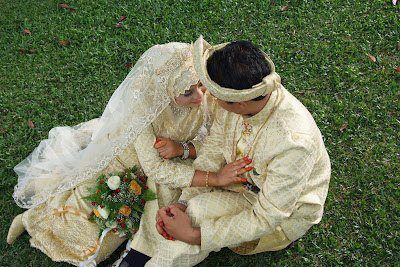
Interfaith marriages between Muslims and non-Muslims are occurring with increasing frequency in Canada and frequently come with concerning bug for couples also as their parents. A spousal relationship between a Muslim and a Roman Cosmic tin can pose detail challenges, because both traditions accept rules seeking to ensure the prevalence of their ain organized religion in the relationship. Seeking to finer navigate religious rules prior to and throughout an interfaith union can cause bang-up tension, requiring instruction, accommodation, and mindful decision-making on the part of the couple and their extended families.
Many Muslim parents with adult children because marrying outside of their organized religion fright that their son or girl may abandon their faith. Their grandchildren may not be raised Muslim and could grow up without whatsoever religion at all. Some also fear repercussions with respect to the social perception of their family by other members of the Muslim community.
Muslim Intermarriage Law
The Qur'an recommends that Muslim men marry Muslim women, but says that they may also marry Jews and Christians (2:221; five:5). According to Islamic Law (Shariah), if a Muslim human wishes to marry a non-Muslim woman other than a Christian or a Jew, the woman must convert to Islam. Jews and Christians, similar Muslims, are considered to be People of the Book who share revealed scriptures perfected in the Qur'an. The Qur'an is silent on marriages of Muslim women to Jewish and Christian men, but the principal schools of Islamic jurisprudence all agree that under no circumstances may a Muslim adult female marry a not-Muslim man. Even a woman who converts to Islam afterwards matrimony must not remain married to a not-Muslim husband.

The rationale given for these rulings is that if men required special permission to marry a non-Muslim, women also crave special permission. Since the Qur'an provides no such permission, marriage between a Muslim adult female and a not-Muslim human being must be prohibited. Some Islamic scholars argue that co-ordinate to the Qur'an, the hubby is the head of the family unit and thus entitled to exercise authority over his married woman (4:34), and that a non-Muslim may not exercise authority over a Muslim. Others maintain that assuasive a Muslim adult female to marry a Christian or a Jew or, indeed, whatsoever human of another religion, may put her religious beliefs and rights at risk and potentially crusade her to face oppression in the practice of her faith.
In recent years, a number of Islamic scholars have argued that this assumption no longer holds truthful, as men and women are treated as equals and women are perfectly capable of making their own decisions. Indeed, a number of imams, notably in Europe and North America, are conducting such marriages.
Co-ordinate to Islamic Law, if a Muslim man marries a Jewish or Christian adult female, the woman has the right to continue practicing her faith. But the children of a Muslim man must always be raised as Muslims. No Muslim is permitted to convert to another religion. Whatever such act is viewed as betrayment and punishable, including past death in some Islamic jurisdictions.
While the religious laws in Islam with respect to interfaith marriage seem relatively clear, it is less articulate how they can realistically be implemented. If the non-Islamic partner in a relationship is willing to acquire almost and wholeheartedly comprehend Islam, compliance with the rules may cause few problems. If religion is not important to her or him, they may embrace Islam in proper noun just in what may essentially be a conversion of convenience. Only if religion truly matters to both parties, constant by the Islamic laws on interfaith wedlock may either produce an inequitable, imbalanced relationship, dominated by the Muslim partner, or dominion out a marriage altogether.

A Jewish or Christian adult female who marries a Muslim human may be allowed to do her faith, but only with limitations. She may notice it hard to do so freely, if she feels that it is not beingness respected or honored by her spouse and/or his extended family and faith community. She volition be expected not to share her organized religion with her children which, if she happens to exist Roman Cosmic, may conflict with her religious requirement to raise her children in her faith. If the children only larn about the organized religion of one parent, this tin can produce the perception in them that i parent is more of import than the other.
The Islamic rules on interfaith marriage appear to conflict with other qur'anic teachings. The Qur'an encourages openness to and interaction with people of different backgrounds:
We have created you male and female, and have fabricated you into nations and tribes, in order that you might come up to know one another. In the sight of God, the noblest among you is the 1 who is most deeply conscious of God. (49:13)
It besides states that "at that place is no compulsion in matters of religion" (256). Above all, the rules seem to conflict with the principle of justice, a fundamental spiritual principle promoted by the Qur'an.
In light of the above qur'anic teachings, how are the Islamic rules on interfaith marriage to be interpreted? The British-Pakistani Islamic scholar Ziauddin Sardar in his enlightening book entitled Reading the Qur'an (2011) challenges the notion that all statements and injunctions in the Qur'an have universal applicability. He contends that the Qur'an is a text revealed in history and that some verses have significance only for the time in which they were revealed. The Qu'ran is not a volume of law but "the source of principles for the making of laws" (p. 203). There is a need to "differentiate betwixt legal requirements and moral injunctions" (p. 203). The Qur'an does non provide definitive rules of conduct for each and every situation merely offers moral references, a set of spiritual principles on how to orient our lives and on how to guide and modify private and social beliefs. Sardar writes:
The Qur'an seeks to build a moral society, not a legalistic one.... [A] specific legal injunction, or law, provides an instance of how [a] principle was realized during the life of the Prophet Muhammad in the context of seventh-century Arabia. When the context changes or the law ceases to reverberate the principle, the police must exist changed. Indeed, if the police force is not changed information technology will inevitably end past violating the principle… The claiming of understanding the Qur'an is to understand information technology in our own time (p. 372).
Sardar argues that the emphasis on religious rules in Islam stems not from the Qur'an but from the Muslim tradition.

Does Sardar's argument accept implications for the Islamic rules on interfaith marriage? When nosotros closely examine the rules, it becomes articulate that they simply address men. They reflect the context of a patriarchal society where women played a subordinate and secondary role; a society in which fathers arranged marriages for their sons and daughters who were expected to comply with their decisions, and where marriage was divers more than by collective family unit interests than as a union between two individuals based on mutual dearest.
Past contrast, immature women and men in Canada today expect to be treated deservedly. They are encouraged to develop critical thinking, make independent decisions, and take responsibility for their actions. Most cull their own union partner and marry for love. Religion is no longer viewed primarily equally involving the unquestioning compliance with religious rules and practices. Instead, it is seen every bit an assistance to growing in spiritual awareness, to living by moral principles, and to acting authentically and responsibly. It is within this context that salubrious intermarriage between Muslims and members of other religions tin be viewed today.
Principles to Live With
An approach to interfaith spousal relationship based on spiritual values and moral principles requires a shift in thinking on the part of couples, their parents, and their communities. Such an approach is internally not externally driven, demanding a higher level of awareness than merely complying with religious rules and conventions. Information technology volition probably require courage and principled decision-making, as the prevailing religious laws on interfaith marriage in Islam are deeply ingrained in the thinking of nearly Muslims.
Parents tin assist and back up their adult children who seek to marry outside their religion by encouraging them to exist authentic in their faith, to respect the religious differences betwixt their partner and themselves, and to allow each other to be and to abound equally who they are. Past inspiring a son or daughter to learn more nigh their own religion, every bit well as their partner's, parents tin can help them deepen their religion, overcome misconceptions virtually their partner's faith, and discover shared values, principles, and beliefs. This is the alternative to urging religious uniformity for them. They can be empowered to strive for unity based on similar values, principles and beliefs, and on mutual love and respect, compromise, and accountability to a higher ability.
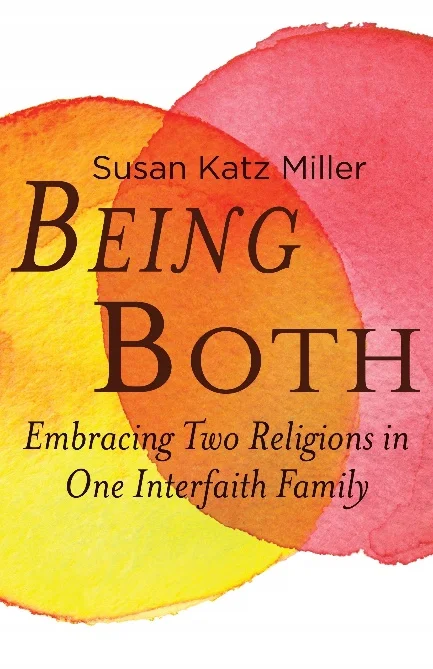
The children arising from such a union will depict inspiration and direction from their parents' values and principles, the practice of their two faiths, and, above all, from their relationship with each other and the way they deal with their differences. Splendid guidance for raising children in an interfaith wedlock from a spiritual perspective, that respects and honors the religions of both parents, may be found in the book Being Both: Embracing Two Religions in One Interfaith Family (2013) by Susan Katz Miller.
The indiscriminate adherence to what may be perceived to be religious rules in i'south faith tradition can exist a source of division in an interreligious relationship. If a person's observance of religious rules essentially changes in the form of an interfaith wedlock, it can accept meaning implications for her or his partner, especially if the requirements differ greatly from practices in the partner'due south faith. In Islam, there are numerous religious rules which bear on most areas of life, from prayer rituals to dietary requirements, from dress codes to rules for borrowing and lending money. Not all rules are vested with equal importance, and many practices thought to be based on religious laws derive from niggling more than socio-cultural traditions.
Authentic religious practise entails awareness of the pregnant, purpose, and source of a perceived religious requirement instead of embracing it without question. By exploring the meaning behind presumed religious rules, yous not only raise your level of spiritual awareness just also acquire to discern what is essential and not-essential in the practice of your organized religion. The ability to observe shared meaning and purpose unites. In an interreligious matrimony, understanding the meaning behind your spouse's religious practices tin can deepen your bond with your partner, particularly when a like pregnant can be plant behind religious requirements or practices in your own faith. For case, Ramadan in Islam and Lent in Christianity both reflect the principle of cede and fasting for the purpose of inner purification.
Interfaith couples face up the challenge of balancing their different religious practices. What matters most is that both sides respect what is truly of import to their partner and themselves and seek a compromise with respect to rules and practices that are of bottom importance to them. To practice so, sometimes requires one side to give a piddling more than the other.
An interfaith wedlock can exist deeply rewarding and enhance ane'south spiritual sensation past opening up new perspectives on and experiences of the divine and other people. While religious differences tin can take a major impact on a marriage, ultimately other aspects of the human relationship may exist of greater significance to the success or failure of a union. The parties' emotional stability and maturity, their level of spiritual awareness, and their compatibility equally a couple will largely define how they will bargain with their religious differences. When both parties are secure in who they are, including in their religious identity, and their relationship is divers past mutual dear and trust, by respect for each other's differences and by a focus on God, religious differences go secondary in the human relationship.
Source: http://www.theinterfaithobserver.org/journal-articles/2018/11/13/when-muslims-intermarry
0 Response to "Can a Muslim Man Marry a Christian Woman"
Post a Comment